
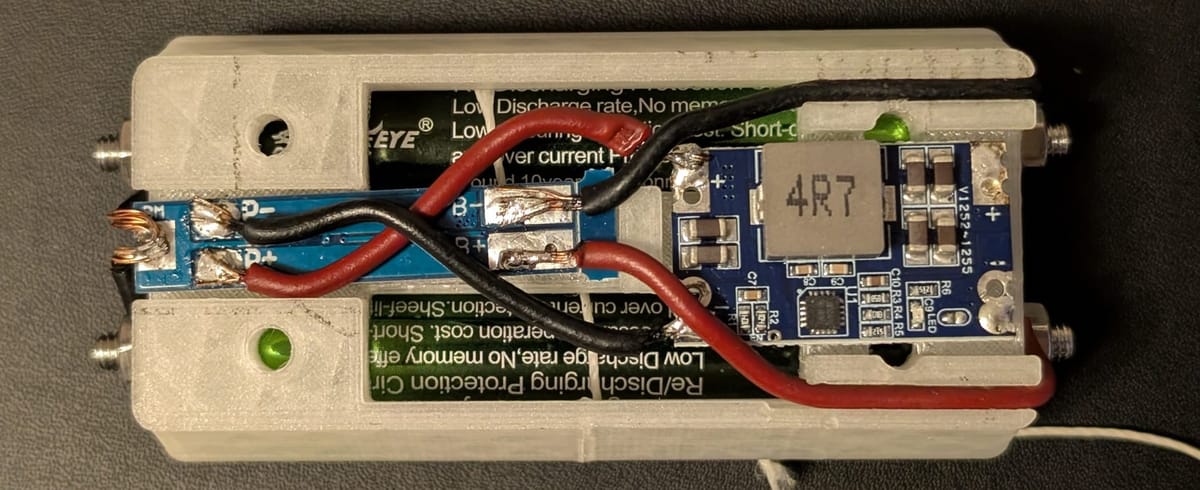
I've been stuck in this situation many times:
- Many things run on a 5V DC input.
- There is no such thing as a 5V battery.
- Lithium-polymer batteries are widely available and have incredible energy density, but are basically 4V batteries. Boosting that up to 5V isn't sufficient for more than small loads.
- 4V x 2 = 8V which is too much, but it can be bucked down to 5V with good throughput
But wait. Do I really want to deal with:
- building multi-cell lipo packs, the spot welds and battery management wiring
- charging multi-cell lipo packs ( charging is specifically when the fire risk with these batteries increases - not a trivial concern )
- keeping cells balanced and individually protected from over/under voltage and current limitations - treating the cells well will ensure they last longer
I guess the answer is yes. The use-case comes up enough and I'm always just fumbling with a USB power bank looking like a noob. Not any more!
My Requirements
- 2S design with 2x removable 18650 cells
- 5V DC out, stabilized and good for a few amps at least
- built-in cell protection
Why removable cells? I can easily pop them out, interchange them and charge them as individual cells. For now that seems simpler than figuring out how to correctly 2S balance charge. Wiring up my own multi-cell packs that charge feels like a recipe for a fire.
Luckily there are some useful off-the-shelf components that will help me accomplish my goals. Specifically, "battery management" boards to help coordinate multi-cell packs and "buck converters" to take the battery voltage down to a stable 5V.
The Electronics
I actually rely on the Amazon page for a product to have a schematic. Most importantly it will match whatever thing I actually bought, which in a world of knock-offs, can be a pitfall.
This is a battery management circuit that will keep an eye on the voltage of each of my 2 battery cells, cutting off the power if one goes 'under voltage'. It also passively 'balances' the cells voltages against each other. Together this ensures the weaker cell of the two is not getting punished too badly. This is the slightly more grown-up way of just wiring these cells in series.
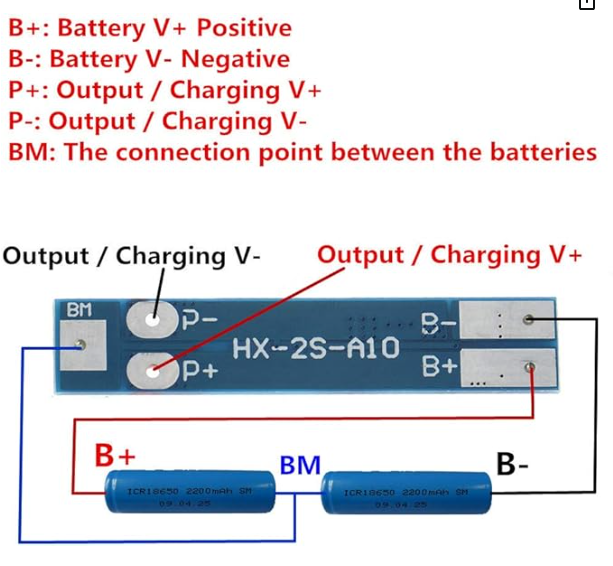
The roughly 7.2-8.4V provided by those two cells will go straight into this:
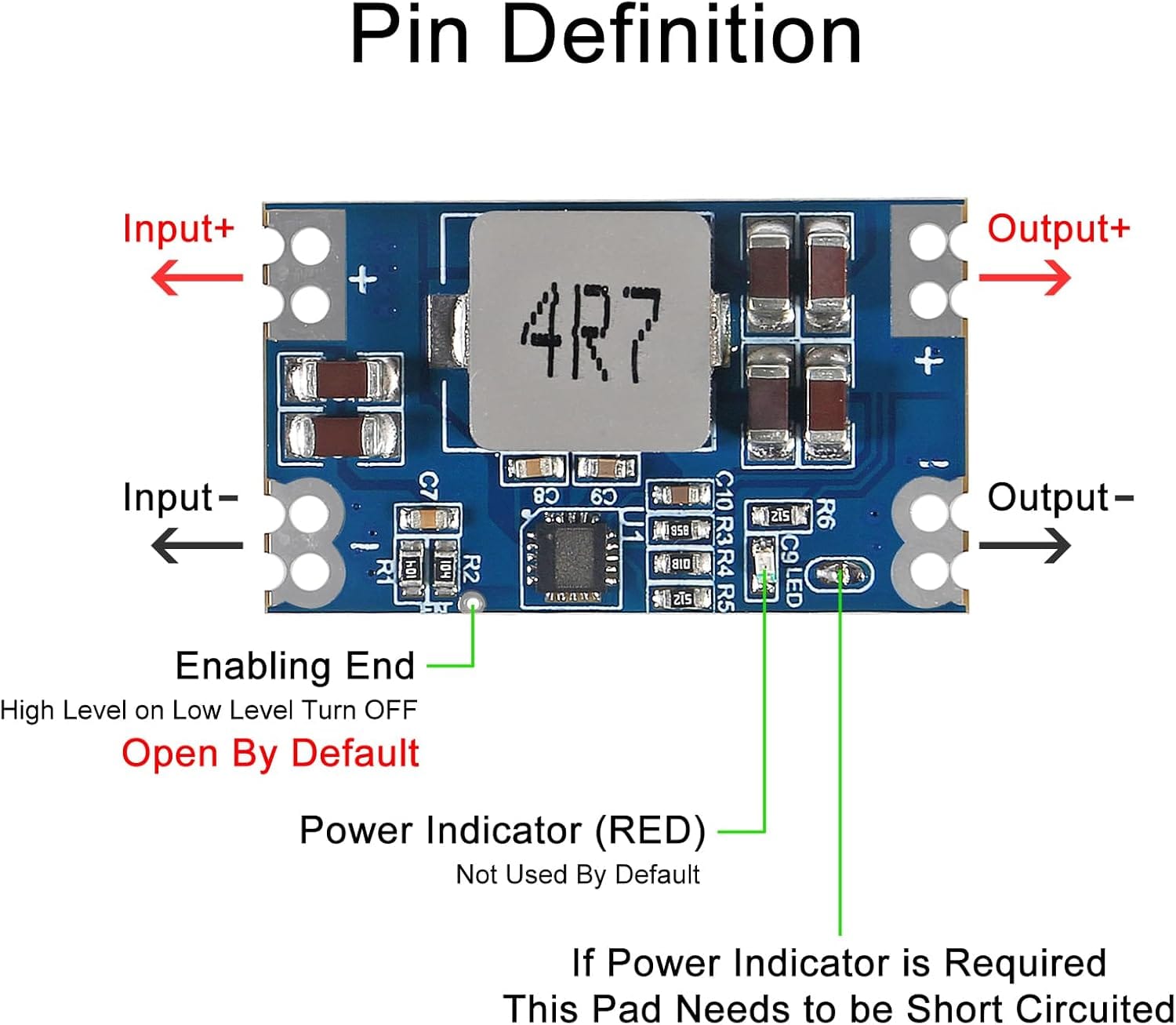
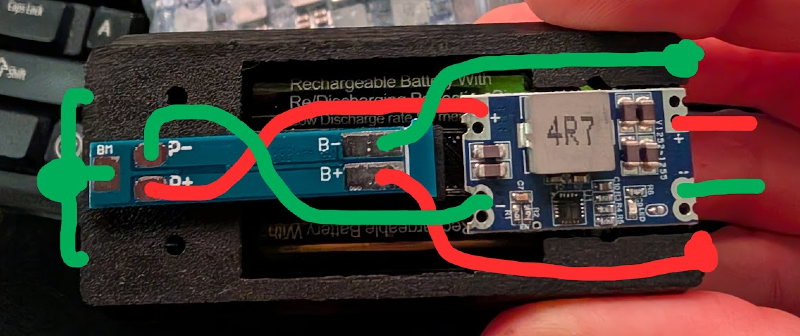
So together you can see how we go from two battery cells at about 4V each to a safe, reliable 5V output. This is slightly more complex, but should be more robust than boosting a single cell up to 5V.
The 3D prints tho
There are no lack of 18650-shaped widgets available on Thingiverse, so I found a good starting point for what I wanted to do:
 bazis
bazis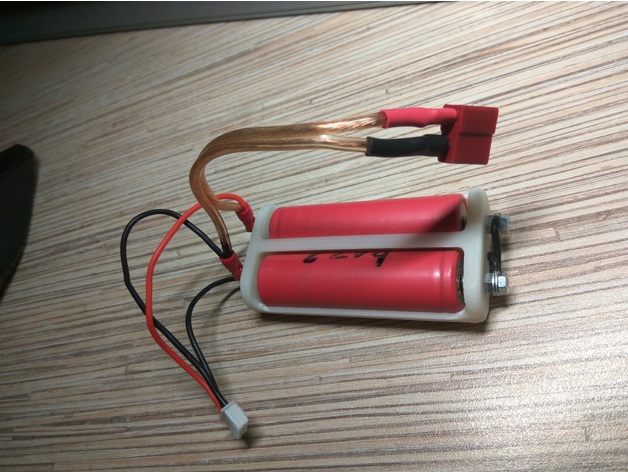
I like how the screws can be adjusted to get the perfect amount of tension on the battery cells.
I put this model in Blender and stretched out the bottom to make more room for the electronics I'm adding.
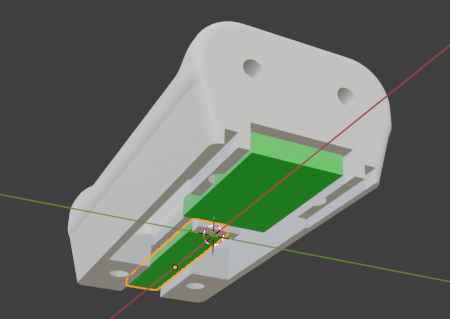
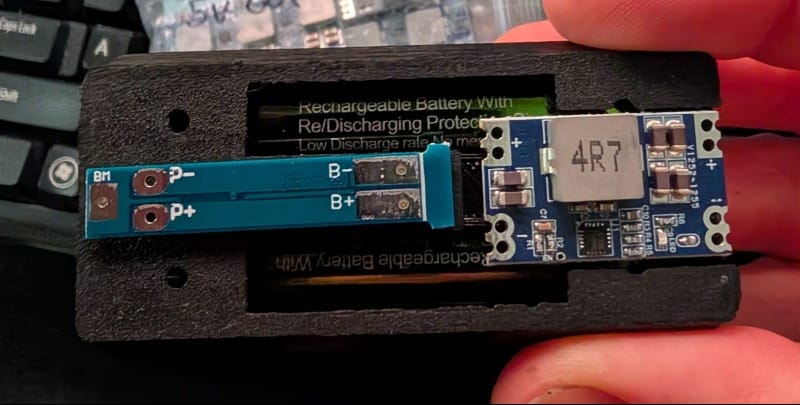
Plan wiring
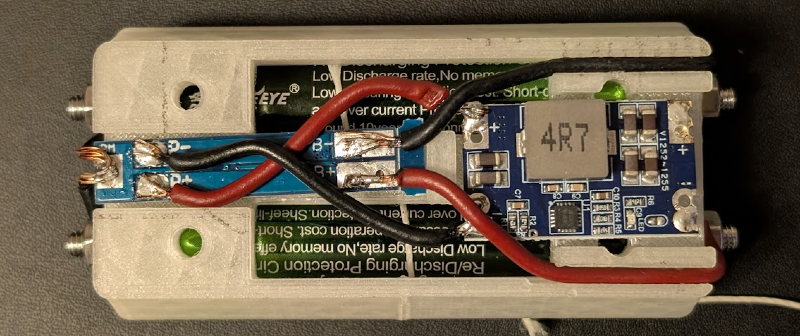
V2 print ( glow-in-the-dark PLA! )
Know your limits
One thing I completely forgot is that this 5V buck regulator is rated for 2A maximum current. For most* DIY projects in the small/medium range this is plenty. Anything with a real load like a motor and suddenly this can become a problem.
One of the first things I hooked this up to was a brushed DC motor, which stalled and promptly overwhelmed the buck converter - frying it. That was an important lesson, a reminder to watch your amps.
This project was originally "Rebuilding a battery pack for a 25 year old Dremel", but that actually took it's own tangent and left this effort behind. Ultimately that wound up being a NiCd cell-swap. ( this load would immediately fry the buck converter in my new pack )
After replacing that first one, things have worked pretty well with one quirk: The battery management board will shut off when both cells are removed and I have to momentarily short the B- to the P- to wake it back up once I've put cells back in.
I'm going to call this a success. I learned some stuff and have a modular, reproducible, functional thing to show for it.